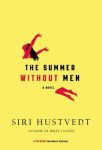
The Summer Without Men, Siri HustvedtThe Summer Without Men tells an old, seemingly simple, well-known and straightforward tale: Man and woman marry. They live happily for a long time (thirty years). Man finds younger woman. Man leaves wife.

It is a very familiar tale. Even so, that’s how it all begins in this intriguing new novel by Siri Hustvedt. It tells a kind of story we have all heard and which quite a few have lived through or witnessed. The older man who swaps his wife for a newer model. It could have been the mature woman who swapped her husband for a younger man. As we all know, there are twists to all of these tales. They may a first seem frightfully similar but are all are unique.

The story Siri Hustvedt tells about Mia Fredrickson and her husband Boris most certainly has its twists and turns. Boris doesn’t “actually” leave her, he just wants a break. Which, of course, mostly is another way of saying that he wants some time for testing before he finally decides to switch fully over to the newer model? But only “mostly”, as there is room for alternative interpretations when “pauses” are involved – maybe he still loves Mia; maybe he wants to come back; and at the very least he is not entirely, completely certain – and in those possible alternatives reside ambiguity which can serve as a foundation for hope.

At first Mia doesn’t see this. She has a mental breakdown and is hospitalized. That, too, is a “pause”, albeit of a different kind; a pause from reality, demands, explanations. A pause from a life that has collapsed, from a world in dire need of reconstruction.

After a brief spell in the hospital, she decides to slip away again, this time geographically, to where her mother lives – ensconced in independent living quarters in Minnesota. Visiting there, in a rented cottage, she seeks the company of her mother and her elderly women friends; in a kind of female companionship with a group of ladies she calls "the Five Swans".

She also starts a small, intimate poetry group consisting of seven thirteen-year-old girls, "informed little broads … [with] … shocking lack of empathy”. Also, gradually and slowly, she builds a relationship with her young neighbor Lola, and her four year old Flora and a baby.

She finds respite and distractions in these relationships with women in these different settings. They don’t remove her pain – she still suffers and sobs – but they give her other lives to connect with and engage in, other realities to comprehend, very different outlooks and mind-sets that provide new and to some extent richer perspectives on her own misery as she actively engages in self-appraisal. She seeks, after all these years, to understand what she is – alone, without Boris. What/who is the person that for so long has been one of a dyad, a couple, a duality of seeming ever more kindred spirits? Is the individual that she was still there? Can it be reconstituted from the duality? How has it changed?

Mia’s journey in The Summer Without Men may be just another twist in a much too familiar tale. Even so, it’s an interesting story and a wonderful exploration of female identity: honest, vigilant, intelligent and sensitive. This time Siri Hustvedt experiments with her style as well – some places I liked it, some places I thought it was less effective. But the book – the delightful little twisted tale of The Summer Without Men – I found very enjoyable. It is quite clever, in an odd way beautiful, very vivid and well worth reading.

Praise for The Summer Without Men:

“Exuberant… A lighter, more lilting meditation on men and women, released in perfect time for summer reading… Hustvedt is a fearless writer… The reward for readers comes in the sheer intelligence of her prose… There is terrific writing here, mulling the gifts and limits of art, sex, marriage, but the touch is emphatically light… She’s managed not to shrink the truth of women’s lives, without relinquishing love for men.” –San Francisco Chronicle

“Breathtaking… hilarious… What a joy it is to see Hustvedt have such mordant fun in this saucy and scathing novel about men and women, selfishness and generosity…. Hustvedt has created a companionable and mischievous narrator to cherish, a healthy-minded woman of high intellect, blazing humor, and boundless compassion.” –Donna Seaman, Booklist

{ 0 comments }

{ 0 comments }

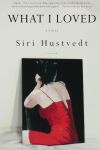
What I Loved, by Siri Hustvedt

December 30, 2009

What I Loved is a complex, beautifully written book. Viewed from the outside, it’s tale about friendship told through the point of view of Leo. Leo is an art historian. He befriended an artist, Bill, back in the 1970s in New York. Their friendship, or relationship, What I Loved, by Siri hustved spans 25 years and involves their wives and children. We learn about the relationships and how they have developed.

All this sounds pretty simple and straightforward. Only it isn’t. For the characters are New York academics and intellectuals. And anything but simple and straightforward. They inhabit a strange, alien and somewhat elevated world of universities and art galleries. And their lives are not only slightly on the complex side, but also – of course – constantly and forever subject to analyses, interpretations, commentaries and the oh so unavoidable re-interpretations. The characters are at times so busy interpreting that you wonder how they manage to live their lives – and truth be told; they seem at times to live less than they could, as there is a real trade-off involved.

So the book is much more than a tale about relationships of different types. It is also a very clever and intelligent book about the layers our lives are laid out in – of the inner relationships between the personal and that which is shared; between that which seemingly are personality traits and those parts of “us” that are fluid and ever changing with time, situations and lived experiences. To me it is also a tale about the somewhat silly and here quite excessive style of living where interpretation is everything – and where questions about the real (whatever that is) and issues of impression management and presentation of self lurk behind the seeming intellectual discussions, more or less well-disguised among the various arrangements and rearrangements of events.

Then tragedy strikes – a death. And now the novel changes from a chronicle of relationships to something which feels almost like a psychological thriller. Now grief – a real feeling, calling for real understanding, as opposed to posturing and over-intellectualization – enters the scene. Now there is a real, existential need to understand and make sense of. And the intellectualization of the world all of a sudden meets with wild and raw feelings in need of expression too. And where do normal grief stop and hysteria of madness begin? What is normal now?

This layered, experimental novel, with all its ambition and richness, is very fascinating. It can be read as a commentary on intellectualism, an exploration of identity, a study of events and meanings, and many other things. It deserves to be read and re-read, to be interpreted and re-interpreted. As a novel should, it raises more questions than it answers; as a piece of art it lays the world open for new interpretations. What I Loved is smart, sensitive, full of restrained intensity and insights, creative and engaging.

Hustvedt’s real achievement is to push the boundaries of the novel further – Julie Myerson, The Guardian

{ 1 comment }

{ 0 comments }

In an interview Siri Hustvedt was asked “What tips or advice do you have for writers still looking to be discovered?”

Her answer was interesting and also quite clear:

My first piece of advice is read, read, read, and keep reading. Nobody becomes a writer without loving books. My other tip to young writers is: write only what you must write, not what you think you should write. People who simply want to turn out a poem, a story, or a novel end up writing badly and their prose resembles the prose of other mediocre books. Good books are a product of necessity, a burning need to say something. They have an urgency that the reader can feel from the start.

{ 0 comments }

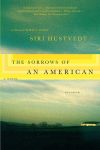
The Sorrows of an American, by Siri Hustvedt

December 3, 2009

The Sorrows of an American is interesting for a number of reasons. One reason is that Siri Hustvedt’s main character is a male. This is a first in her novels, but I think she pulls it off nicely. A second reason is the many personal and to some extent distasteful things that are exposed in [...]

Read the full article →

Trivia about Siri Hustvedt

November 27, 2009

In some of the interviews with her, Siri Hustvedt has been asked questions about unimportant details (to the outsider, that is) about her life. To some extent trivia are bit of   obscure and useless knowledge, but to some extent is may also be interesting and perhaps also a tiny bit important in understanding a person. [...]

Read the full article →

Siri Hustvedt – short biography

November 23, 2009

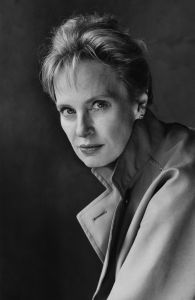
Background Hustvedt was born in Northfield, Minnesota in 1955 and lived in Minnesota prior to moving to New York. Her father, Lloyd Hustvedt, a professor of Scandinavian literature, came from a Norwegian immigrant family. Her mother, Ester Vegan, whom her father met in Oslo after the war, emigrated to the US at 30. ‘I did [...]

Read the full article →

Siri Hustvedt’s Ten favorite books

November 23, 2009

Wuthering Heights by Emily Brontë because it is a brilliantly written book about the mysteries of human passion. Remembrance of Things Past by Marcel Proust, a writer who articulates subtle truths about human psychology that I recognized only once I had read him. Crime and Punishment is probably Fodor Dostoevsky’s most perfect book in terms [...]

Read the full article →